





2013 changes to the approved documents for part L of the building regulations
Contents |
[edit] Introduction
Changes to the approved documents for Part L of the building regulations came into effect on 6 April 2014 when the 2013 editions of approved documents L1A and L2A came into force, and 2013 amendments to the 2010 editions of approved documents L1B and L2B came into force.
Under transitional arrangements, the previous approved documents continue to apply where work commenced before 6th April 2014, or where a building regulations application was made before 6 April 2014, as long as the work commences before 6th April 2015.
[edit] Approved Document L1A: Conservation of fuel and power in new dwellings, 2013 edition
The main changes approved document L1A are that:
- A new requirement, regulation 26A, has been introduced that requires new dwellings to achieve or better a fabric energy efficiency target in addition to the carbon dioxide target.
- The notional dwelling used to determine carbon dioxide and fabric energy efficiency targets is the same size and shape as the actual dwelling, constructed to a concurrent specification. The Part L 2013 specifications have been strengthened to deliver 6 per cent carbon dioxide savings across the new homes build mix relative to Part L 2010.
- A summary of the Part L 2013 notional dwelling is published at Table 4 in the approved document with the full detail in SAP 2012 Appendix R. If the actual dwelling is constructed entirely to the notional dwelling specifications it will meet the carbon dioxide and fabric energy efficiency targets and the limiting values for individual fabric elements and buildings services. Developers are, however, free to vary the specification, provided the same overall level of carbon dioxide emissions and fabric energy efficiency performance is achieved or bettered.
- The document consolidates the amendments made in December 2012 requiring the feasibility of high-efficiency alternative systems to be taken into account before construction commences.
- The guidance for insulation of circulation pipes within communal spaces is given greater prominence.
[edit] Approved Document L2A: Conservation of fuel and power in new buildings other than dwellings, 2013 Edition.
The main changes in approved document L2A are that:
- The notional building used to determine carbon dioxide targets is the same size and shape as the actual building, constructed to a concurrent specification. The Part L 2013 specifications have been strengthened to deliver 9 per cent carbon dioxide savings across the new non-domestic building mix relative to Part L 2010.
- A wider set of notional buildings has now been defined for top-lit, side-lit (heated only) and side-lit (heated and cooled) buildings. The notional building air permeability has been further subdivided by size.
- A summary of the Part L 2013 notional buildings is published at Table 5 in the approved document with the full detail in the National Calculation Methodology (NCM) modelling guide.
- If the actual building is constructed entirely to the notional building specifications it will meet the carbon dioxide targets and the limiting fabric and buildings services parameters. Developers are, however, free to vary the specification, provided the same overall level of carbon dioxide emissions is achieved or bettered.
- The document consolidates the amendments made in December 2012 requiring the feasibility of high-efficiency alternative systems to be taken into account before construction commences.
[edit] Approved documents L1B and L2B
- Approved Document L1B: Conservation of fuel and power in existing dwellings.
- Approved Document L2B: Conservation of fuel and power in existing buildings other than dwellings.
Both remain at their 2010 edition. However some amendments were made to those 2010 editions: Amendments to Approved Documents L1B and L2B 2010 editions.
- There is a strengthening of energy efficiency standards for specified non-domestic building services (i.e. when replacing chillers, fan coil units and lighting) and the introduction of an alternative route of compliance for lighting installations, the Lighting Energy Numerical Indicator (LENI). This is set out in the 2013 edition of the Non Domestic Building Services Compliance Guide.
- There is no strengthening in Part L 2013 of the energy efficiency standards for extensions or replacement windows and doors to existing homes or existing non-domestic buildings.
- The department has however published amendments to Approved Document L1B and Approved Document L2B (2010 editions). These amendments make reference to updated British and European Standards and third party guidance. These include new references to third party guidance on Window Energy Ratings and the introduction of Door Set Energy Ratings as an alternative route of compliance and on establishing U-values based on the developed area of the roof-lights.
- These amendments are in addition to and to be read in conjunction with those made to Approved Document L1B and Approved Document L2B earlier in 2013 to take account of the requirements for major renovation in the recast European Energy Performance of Buildings Directive and the introduction of a new Approved Document 7 providing guidance on materials and workmanship.
[edit] Related articles on Designing Buildings
- Approved documents.
- Approved inspector.
- Building control bodies.
- Building Regulations.
- Door energy ratings.
- Dwelling fabric energy efficiency rate.
- Energy certificates.
- Lighting energy numeric indicator.
- Limiting fabric parameters.
- National Calculation Methodology.
- Part L.
- The Building Act.
- Target fabric energy efficiency rate.
- U-values.
- Window energy ratings.
Featured articles
Check out some of the best features and news from Designing Buildings as well as key stories from around the web.
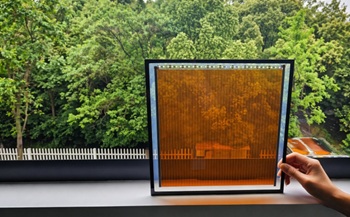
Generating energy from internal light as well as sunshine.

ECA welcomes plans to strengthen subcontractor quality control.

Combining mid-career qualifications with experience broadens career opportunities.

Why being a mentor can help your career.

Channel 4 broadcaster to host 125th anniversary ceremony.
Listed structures on the rail network
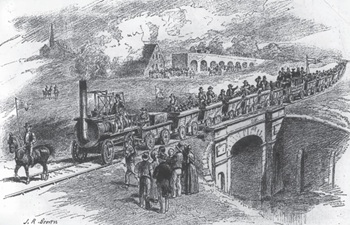
Heritage interests and operational requirements must be balanced.
Historic England publishes research into embodied carbon when retrofitting traditional buildings.

New Prime Minister delivers on ECA call for cut in electricity costs.

CIOB reacts to the announcement of Andy Burnham as Prime Minister.

Heritage and conservation science workforce survey - Have your say.
England's Suburbs 1820-2020. Book review.

New, more proportionate and targeted approach for higher-risk building assessments.